News

Dollar Strength · Geopolitical Risk · Market Volatility · Oil Prices
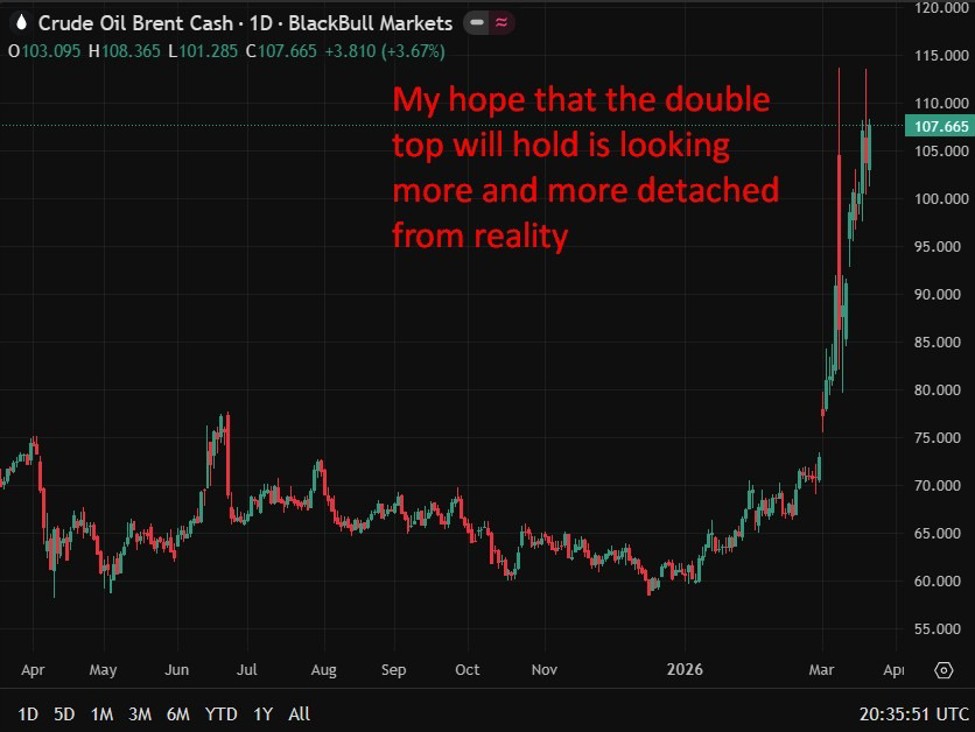
The U.S. dollar surged broadly as a safe-haven asset following the escalation of the U.S.-Israeli war on Iran, which propelled oil prices higher due to fears of global energy supply disruptions and economic growth concerns.
Brent crude spiked over 25% before settling up 10% at $102.99 a barrel, briefly touching $120. This geopolitical tension led to a widespread sell-off in stocks, bonds, and precious metals.
The euro fell 0.5% to $1.1564, while the dollar gained 0.3% against the Japanese yen and 0.5% against sterling. Despite the dollar's strength, analysts caution its sustainability, noting the U.S. economy's uncertain footing and the potential for a sharp reversal if the conflict resolves quickly. Traders are now pricing in approximately 35 basis points of Federal Reserve easing by year-end, a reduction from earlier expectations.
The Canadian dollar, however, found support, leveraging its "petro currency" status as a major oil exporter. Asia, Britain, and the Eurozone are identified as particularly vulnerable to the energy price shock due to their reliance on Middle Eastern oil.
A prolonged conflict and continued currency weakness in these regions could exacerbate inflationary pressures. Bitcoin saw a 3% rise to $69,117 amidst the turmoil.