
News
Federal Reserve · Geopolitics · Inflation · Treasury Yields
US Treasuries rebounded significantly on Monday, with two-year yields plunging almost a quarter point from their peak above 4%, after President Donald Trump eased threats against Iran, providing comfort to global markets.
This rebound halted a multi-week selloff in government debt, which had seen yields rise to multi-month highs due to surging energy prices and inflation concerns stemming from the Middle East conflict. Brent crude slid below $100 a barrel, the US dollar dropped, and stocks advanced following Trump's comments about postponing strikes against Iranian energy infrastructure.
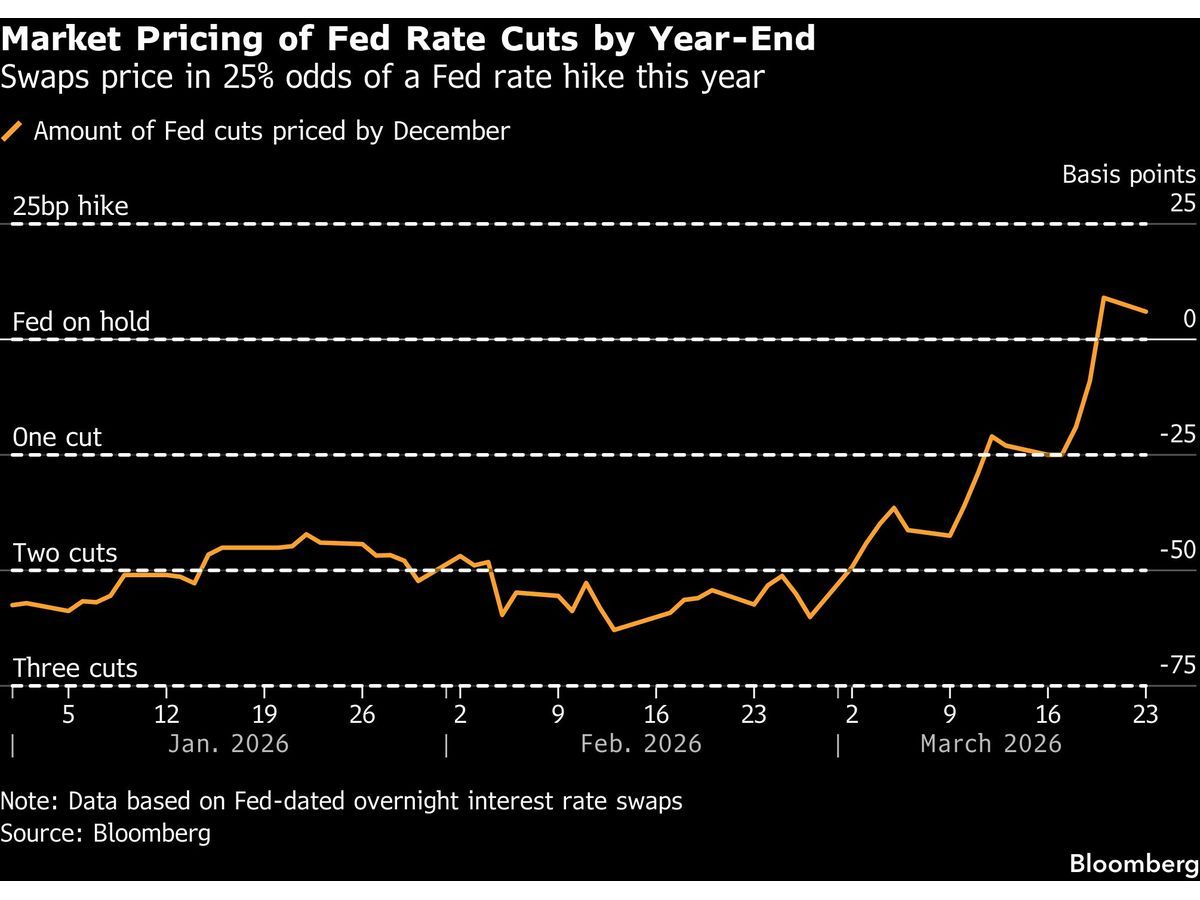
Traders adjusted their Federal Reserve expectations, with swap contracts pricing in a few basis points of easing by year-end, a reversal from last week's hawkish bets for a rate hike. Despite Monday's gains, market participants anticipate continued volatility, as the conflict's resolution remains uncertain and the critical Strait of Hormuz is still virtually shut, according to Priya Misra of JPMorgan Asset Management.
Federal Reserve officials, including Chicago President Austan Goolsbee, acknowledge the potential for either rate hikes or cuts depending on geopolitical developments, while Michael Contopoulos of Richard Bernstein Advisors sees a "very good chance the Fed hikes later this year" to curb demand and inflation.
Trump De-escalation Slashes Treasury Yields, Calms Markets(current)
French Bond Yields Swing on Middle East Uncertainty
Ten-year Treasury yields rose to their highest in eight months and Hargreaves Lansdown said that the bond market could potentially put pressure on Trump to end the Iran war.