Araverus
NewsMarkets
News
HeadlinesThreads
© 2026 Araverus
AboutContactPrivacyTerms
News/Markets/Commodities Futures

Oil Climbs as Mideast Conflict Tightens Supply

Araverus Team|Friday, March 20, 2026 at 7:13 AM

Oil Climbs as Mideast Conflict Tightens Supply

Araverus Team

Mar 20, 2026 · 7:13 AM

Energy Supply · Geopolitics · Oil Prices · Strait Of Hormuz

Energy SupplyGeopoliticsOil PricesStrait Of Hormuz

Key Takeaway

Geopolitical instability in the Middle East means sustained upward pressure on oil and gas prices. This translates to higher energy costs for consumers and businesses, impacting inflation metrics and slowing global economic growth. Energy sector investments, particularly in oil and gas producers, will see continued tailwinds, while industries reliant on cheap energy face margin compression.

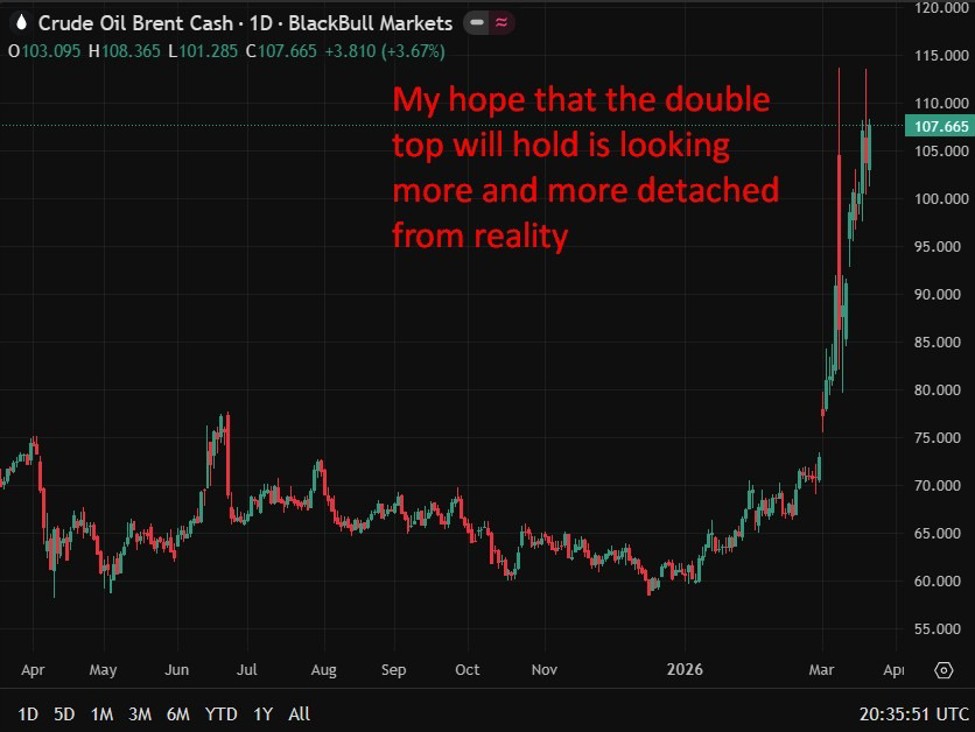
Oil prices gained on Friday, with Brent futures rising $1.67, or 1.5%, to $110.32 a barrel and U.S. West Texas Intermediate (WTI) crude adding 33 cents, or 0.3%, to $96.47, despite concerted efforts by the US and its allies to boost supply and secure the critical Strait of Hormuz amid escalating Middle East geopolitical tensions.

Geopolitical tensions, including fresh attacks between Israel and Iran and a hit on an oil refinery in Kuwait, fueled the price increases. Iran's response to an Israeli attack on a major gas field resulted in a 17% knockout of Qatar’s LNG capacity, with repairs estimated to take up to five years.

Ole Hansen, head of commodity strategy at Saxo Bank, stated that a quick reversal in energy prices is unlikely due to production damage and a tight market. European nations Britain, France, Germany, Italy, the Netherlands, Japan, and Canada committed to ensuring safe passage through the Strait of Hormuz, which handles 20% of global oil and LNG transit.

U.S. Treasury Secretary Scott Bessent outlined potential moves to remove sanctions from Iranian oil and release crude from the U.S. Strategic Petroleum Reserve. North Dakota's crude output is expected to increase as operators restart inactive wells and winter restrictions ease, though the pace depends on sustained high oil prices.

Priyanka Sachdeva, senior market analyst at Phillip Nova, emphasized that inflicted damage and logistical challenges mean full recovery will take a long time, keeping markets sensitive to the Hormuz chokepoint.

Read More On

Oil Retreats on Proposed Moves to Reopen Hormuz, Boost Supplywsj.comOil retreats as US and allies look to boost supply, unchoke Strait of Hormuz By Reuters - Investing.cominvesting.comOil retreats as US and allies look to boost supply, unchoke Strait of Hormuz - Reutersreuters.comJoint statement on Strait of Hormuz by European nations, Japan, Canada - Reutersreuters.comEuropean countries and Japan: ready to help on Hormuz, stabilise energy markets - Reutersreuters.com

Related Articles

Markets★★★Similarity: 80% · 1d ago

Oil Could Jump to $120 or Even Higher If Iran Threats Materialize

Threatened strikes on key energy facilities in Saudi Arabia, the UAE, and Qatar could push oil prices past $120 a barrel immediately, according to Rystad Energy.

Markets★★★Similarity: 79% · 1d ago

Oil Rises After Attacks on Middle East Energy Sites; Asian Stocks Fall

Oil rose Thursday after fresh attacks on critical energy infrastructure in the Middle East, while Asian equity markets fell amid fading expectations for Federal Reserve rate cuts and weaker risk sentiment.

Markets★★★Similarity: 79% · 4d ago

These Energy Stocks Benefit Most From the Iran Crisis

Plus, coalition of the unwilling?

Markets★★★Similarity: 78% · 1d ago

Oil Prices Top $110 a Barrel

Plus, the Fed holds rates steady, and an art collector who keeps buying houses he rarely uses.