News
Climate Change · Glacial Retreat · Landslides · Tsunami
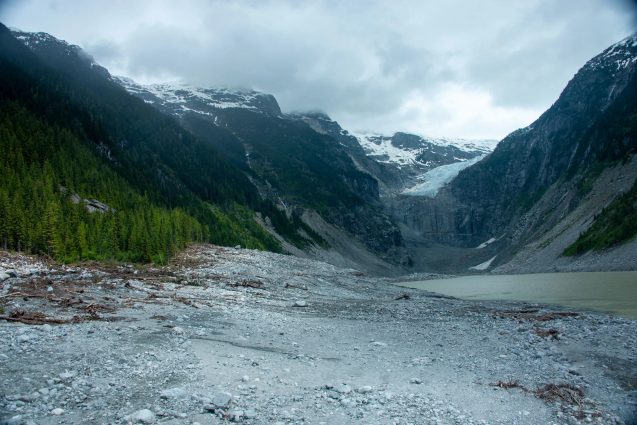
A massive landslide in British Columbia, linked to the rapid recession of the West Grenville Glacier, triggered a devastating tsunami in November 2020, as detailed by scientists Göran Ekström of Columbia University's Lamont-Doherty Earth Observatory and Marten Geertsema of the BC provincial government.
This event, involving 50 million tons of rock plummeting 1,000 meters and creating a 135 km/h wave, destroyed vast forests and salmon habitats, killing hundreds of thousands to millions of fish. Since 1900, at least 1,000 glacial outburst floods worldwide have killed 12,500 people, with British Columbia and Southeast Alaska identified as hotspots.
Researchers, including those from the Hakai Institute and the Homalco and Xwe’malkwhu First Nations, confirm that rapid glacial retreat, like the West Grenville Glacier's 4-kilometer recession since the mid-19th century, creates unstable slopes and meltwater lakes, increasing the frequency of such catastrophic events. Scientists are developing real-time seismic warning systems to mitigate future risks, as increased development in remote areas raises the stakes.