Araverus
NewsMarkets
News
HeadlinesThreads
© 2026 Araverus
AboutContactPrivacyTerms
News/World/Asia

US-South Korea Alliance Stability Crucial Amid Nationalism

Araverus Team|Friday, March 20, 2026 at 11:27 AM

US-South Korea Alliance Stability Crucial Amid Nationalism

Araverus Team

Mar 20, 2026 · 11:27 AM

Geopolitical Risk · Indo-Pacific Security · Nationalism · US-South Korea Alliance

Geopolitical RiskIndo-Pacific SecurityNationalismUS-South Korea Alliance

Key Takeaway

Deterioration of the U.S.-South Korea alliance means increased geopolitical risk for investors in East Asia, impacting regional stability. This directly translates to heightened uncertainty for technology supply chains, defense contractors, and manufacturing sectors reliant on a secure Indo-Pacific, potentially driving up costs and reducing investment.

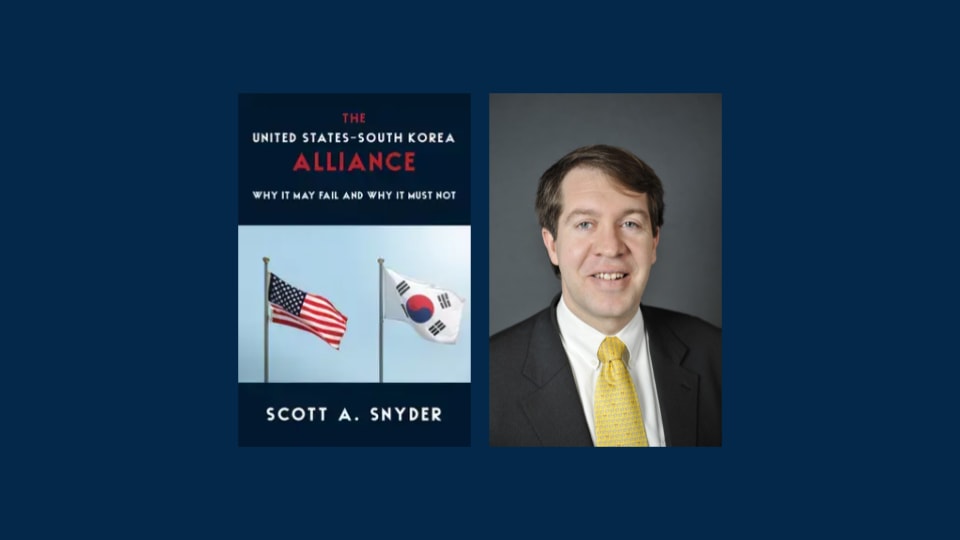
A new analysis by Scott A. Snyder, Senior Fellow for Korea Studies and Director of the Program on U.S.-Korea Policy, reveals the U.S.-South Korea alliance, a seven-decade cornerstone of Indo-Pacific security, faces significant threats from rising exclusive nationalism and deepening political polarization in both nations, potentially impacting regional stability.

The book, 'The United States–South Korea Alliance: Why It May Fail and Why It Must Not,' thoroughly explores how these internal and external pressures could weaken the partnership, detailing the profound implications for the security strategies of both the U.S. and South Korea. It also examines the broader Northeast Asian security landscape, considering how a weakened alliance impacts regional dynamics, including relations with North Korea, China, and Japan.

The author hypothesizes a future without this critical alliance, outlining severe consequences for U.S. and South Korean security and economic interests. Ultimately, the analysis concludes with concrete recommendations for both countries to preserve and sustain the alliance amidst these complex and evolving challenges, emphasizing the necessity of cooperation over self-interest.

Read More On

South Korea, a ‘Model Ally,’ Confronts a Leaner U.S. Military Alliancewsj.comThe United States–South Korea Alliance: Why It May Fail and Why It Must Not - Council on Foreign Relationscfr.orgUS-South Korea military alliance needs mutual support and modernization - The Korea Timeskoreatimes.co.krThe U.S.–South Korea Alliance - Council on Foreign Relationscfr.orgAllies balancing: A safer strategy for the U.S. in Asia - Defense Prioritiesdefensepriorities.org

Related Articles

World★★★Similarity: 64% · 1d ago

Taiwan’s All-Hands-on-Deck Plan to Fend Off China

A growing cohort of self-defense zealots is embracing a mission to get the island ready for an attack.

World★★★Similarity: 62% · 6d ago

For Xi, Iran War Reinforces View of U.S. as Dangerous Superpower

Trump’s assaults on Iran and Venezuela—both Chinese allies and key suppliers of oil for its energy-hungry economy—could reaffirm Beijing’s mistrust of Washington.

World★★★Similarity: 62% · 2d ago

China Isn’t Planning to Invade Taiwan in 2027, U.S. Concludes

Beijing would prefer to take control of the self-ruled island without resorting to force, according to the U.S. intelligence community.

World★★★Similarity: 61% · 3d ago

In Delaying China Summit, Trump Faces a Familiar Mideast Distraction

The war in Iran is the latest example of why several presidents have found it so hard to focus on the U.S.’s most formidable rival.