Araverus
NewsMarketsResearch
News
HeadlinesThreadsAtlas
© 2026 Araverus
AboutContactPrivacyTerms

Araverus does not provide financial, investment, or trading advice. All content is for informational purposes only. Full disclaimer

  1. News
  2. /
  3. Markets
  4. /
  5. Energy OIL
Top Headline

US Blockade Slashes Iran Oil Exports, Raises Storage Risk

Araverus Team|Thursday, June 11, 2026 at 2:08 PM

US Blockade Slashes Iran Oil Exports, Raises Storage Risk

Araverus Team

Jun 11, 2026 · 2:08 PM

Geopolitics · Iran · Oil · Sanctions

GeopoliticsIranOilSanctions

Key Takeaway

The severe reduction in Iran's oil supply due to the U.S. blockade means sustained upward pressure on global crude prices, despite current market mitigations. This impacts energy sector equities, particularly those of oil producers benefiting from higher prices, and influences inflation expectations, affecting central bank monetary policy decisions. Geopolitical tensions in the Middle East mean increased volatility for global markets.

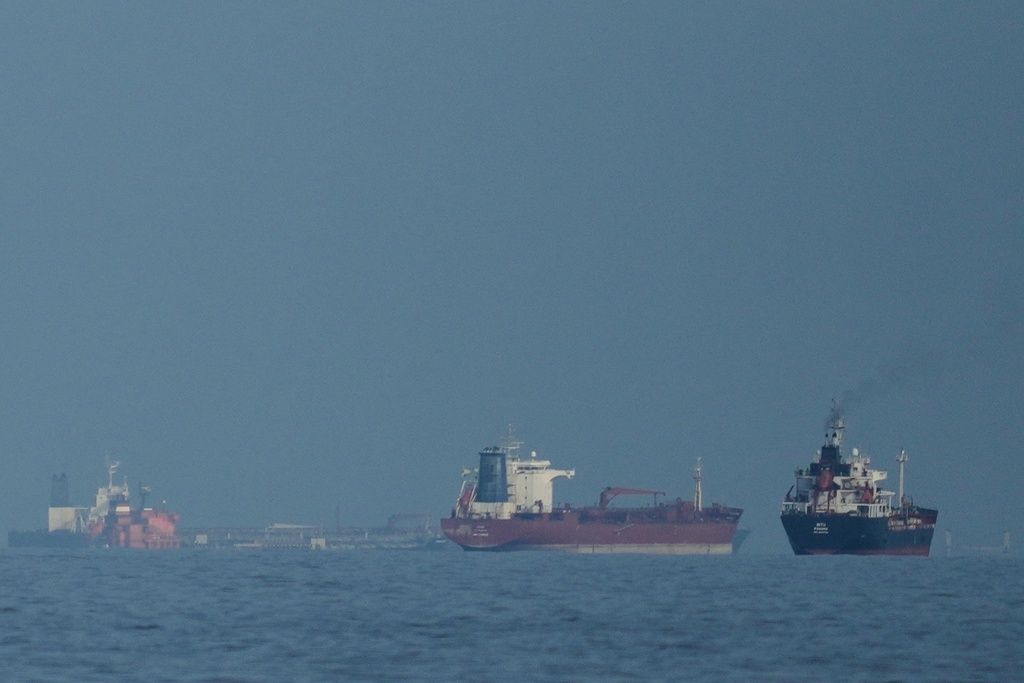
Iran's crude production plummeted over 18% in May, falling by 546,000 barrels a day to 2.33 million barrels a day, as U.S. forces maintained a naval blockade, severely choking off exports and creating a risk of storage capacity exhaustion.

Iranian seaborne crude oil exports dropped to 260,000 barrels a day last month, a steep 1.2 million barrels a day decrease from April, reaching the lowest monthly level in six years, according to Kpler. A complete halt in loadings at Kharg Island between May 6 and May 22 reduced exports from that terminal to 176,000 barrels a day from 1.34 million barrels a day in April.

President Trump threatened further strikes and the taking of Kharg Island after renewed clashes, with negotiations stalled over Iran's nuclear program and financial relief. Despite prolonged supply disruptions, Brent crude traded around $93 a barrel and West Texas Intermediate near $90 a barrel, remaining below March's levels due to emergency oil reserve releases, softer global demand, lower Chinese crude imports, stronger U.S. exports, and pipeline rerouting by Saudi Arabia and the U.A.E. OPEC cut its global oil-demand growth forecast to 970,000 barrels a day from 1.17 million previously, contrasting with the U.S. Energy Information Administration's expectation of a 1.1 million barrels a day decline and the International Energy Agency's projection of a 420,000 barrels a day contraction.

Production from OPEC members fell by 177,000 barrels a day to 18.83 million barrels a day in May, while the broader OPEC+ alliance declined by 185,000 barrels a day to 33.13 million barrels a day, even as Saudi Arabia and the U.A.E. raised production.

Read More On

Iran’s Crude Production Slumped in May Under U.S. Blockadewsj.comAnalysis: Why Iran’s oil industry is increasingly threatened by US blockade - AP Newsapnews.comIran's Crude Production Slumped in May Under U.S. Blockade -- Update - marketscreener.commarketscreener.comIran’s Oil Production Slumped Due to US Blockade, Closure of Hormuz - Asharq Al-Awsat Englishenglish.aawsat.comWill the US Military Blockade Have Any Effect on Iran's Oil? - Energy Digital Magazineenergydigital.com

Related Articles

Markets★★★Similarity: 80% · 6d ago

Oil Slides After Trump Signs Iran Deal, Boosting Supply Outlook

Oil prices fell more than 2% after Trump signed an agreement to end the Iran war and reopen the Strait of Hormuz.

Markets★★★Similarity: 76% · 7d ago

Oil Supply Could Far Outstrip Demand Growth if Middle East Peace Deal Holds, IEA Says

Oil consumption is set to fall sharply lower before flows through Hormuz gradually normalize, setting the stage for a supply surge that could far outstrip demand growth .

Markets★★★Similarity: 75% · 7d ago

Brent Crude Drops Below $80 a Barrel on Prospects of Sanctions Relief, Hormuz Reopening

Brent crude fell below $80 after reports that the deal between Washington and Tehran includes waivers of sanctions on Iranian oil sales.

World★★★Similarity: 74% · 8d ago

The Trump-Iran Deal Allows Tehran to Immediately Sell Oil

The agreement also waives banking and transport sanctions to facilitate transactions, an early financial benefit.