Araverus
NewsMarketsResearch
News
HeadlinesThreadsAtlas
© 2026 Araverus
AboutContactPrivacyTerms

Araverus does not provide financial, investment, or trading advice. All content is for informational purposes only. Full disclaimer

  1. News
  2. /
  3. World
  4. /
  5. Asia

Kim Jong-un Consolidates Power, Tests Elite Economy

Araverus Team|Saturday, April 11, 2026 at 3:00 AM

Kim Jong-un Consolidates Power, Tests Elite Economy

Araverus Team

Apr 11, 2026 · 3:00 AM

Geopolitics · Kim Jong-Un · North Korea · Sanctions

GeopoliticsKim Jong-UnNorth KoreaSanctions

Key Takeaway

North Korea's regime stability, driven by Kim Jong-un's consolidation of power and delicate management of elites, directly impacts the viability of any future economic engagement. This means that any investment in regional infrastructure or cross-border ventures, particularly with South Korea, faces significant political risk, directly affecting sectors like manufacturing, tourism, and resource extraction in the broader East Asian market. The opaque nature of the regime and the influence of *donju* families further complicate due diligence for any potential foreign capital.

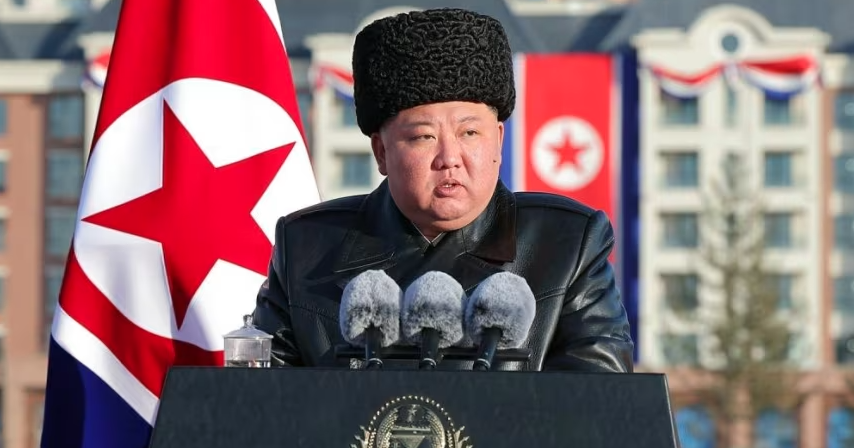
Kim Jong-un, North Korea's Supreme Leader, solidified his absolute authority by reinstating the Worker's Party of Korea as the central political organ, purging top officials, and rebalancing military influence, ensuring regime survival amidst economic challenges and international sanctions.

Kim, the third generation of the Kim dynasty, systematically consolidated power after inheriting leadership in 2012, executing figures like his uncle Jang Song-thaek in 2013 and Minister of Defense Hyon Yong-chol in 2015, and replacing three top military generals in June 2018. This reasserted the party's control over the military, shifting the power dynamic from "party, army, state" to "party, state, army," according to Michael Madden of North Korea Leadership Watch.

Despite North Korea being among the world's poorest nations, an estimated fifty elite families, known as *donju*, control significant wealth and influence the economy, which grew at its slowest rate in over a decade in 2018, as reported by South Korea's central bank. Kim's *byungjin* policy aims for parallel nuclear and economic development, introducing market liberalizations and incentive-based systems, but future economic growth and diplomatic efforts, particularly with South Korea, depend on carefully managing elite support and the pace of change, as noted by Ken Gause of CNA and Jung H. Pak of Brookings Institution.

Read More On

The Surprising Source of North Korea’s Enduring Powerwsj.comNorth Korea’s Power Structure - Council on Foreign Relationscfr.orgPyongyang's Survival Strategy: Tools of Authoritarian Control in North Korea - R Discoverydiscovery.researcher.lifeWhy North Korea Survives - persuasion.communitypersuasion.communityTHE DRIVING FACTOR: Songun's Impact on North Korean Foreign Policy - THE INTERNATIONAL AFFAIRS REVIEWiar-gwu.org

Related Articles

World★★Similarity: 64% · 4d ago

North Korea’s Surprise Offering to the South: Presidential Flattery

Kim Jong Un swapped threats for praise, calling the South Korean leader’s recent apology for a drone incursion a wise move.

Economy★★★Similarity: 60% · 1d ago

Iran Shows You Don’t Have to Be a Superpower to Wage Economic Warfare

With Tehran’s chokehold on the strait, Iran joins U.S. and China as countries that can weaponize economic pinch-points.

World★★★Similarity: 59% · 4d ago

How China Helped Iran Cushion the Blow of Sanctions and Fund Its War Machine

Over the past half decade, China has provided Iran with a financial lifeline by buying most of its oil.

Markets★★★Similarity: 58% · 17h ago

Trump Administration Pushes Biggest Noncombat Ship Upgrade in Decades

A budget proposal aims to revitalize U.S. shipyards and counter China’s maritime dominance with a surge in orders for logistics vessels.