News
Defense Spending · Drone Warfare · Human Factors · Military Technology
The article debunks common misconceptions about drone warfare, particularly in the context of the Qassem Soleimani killing, emphasizing the extensive human involvement and significant psychological toll on operators.
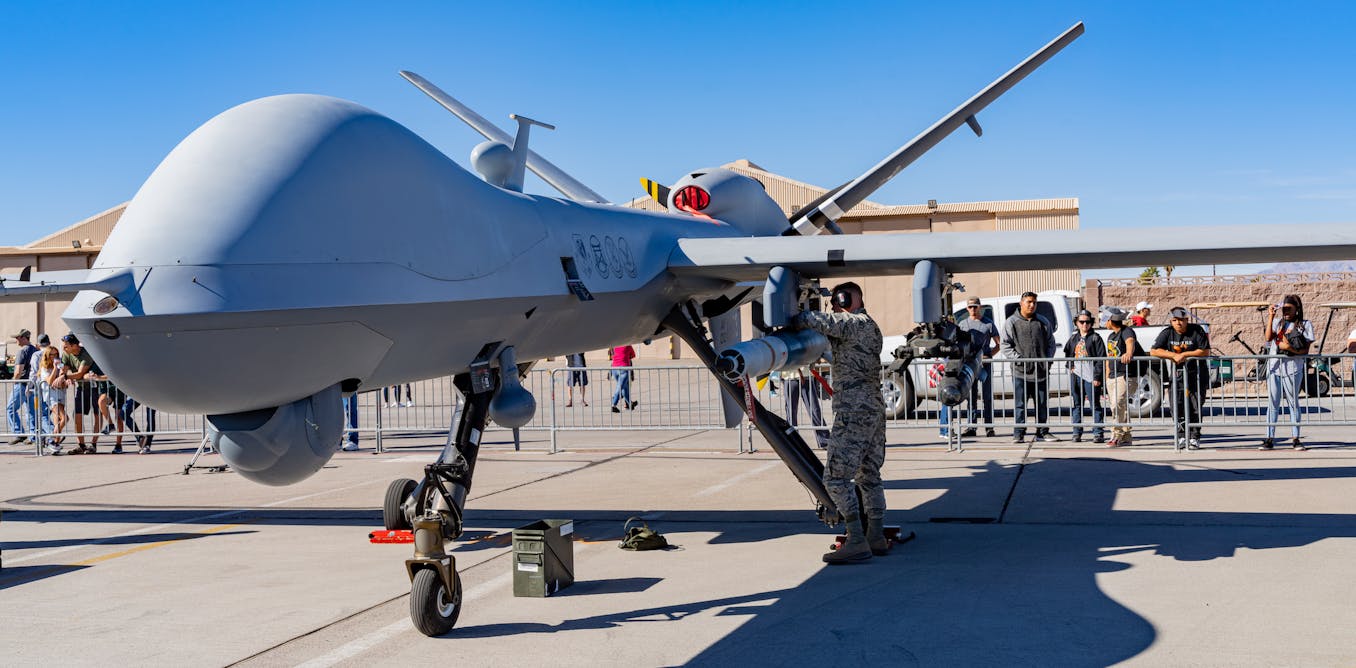
Contrary to popular belief, MQ-9 Reaper drones are not autonomous, nor are their operations akin to video games. Human pilots and sensor operators, often thousands of miles away, are responsible for every critical decision, from launch and flight control to target identification and missile deployment.
The article highlights that operators witness the full, traumatic aftermath of strikes, leading to psychological risks described as 'far greater' than in manned cockpits. Technical details, such as the need for local launch/recovery, satellite signal delays, and the Reaper's fixed-wing flight mechanics, further underscore the complexity and human-centric nature of these operations.
This analysis suggests that while drones offer advanced capabilities, they do not eliminate the human cost of warfare, impacting military personnel's mental health and potentially influencing future defense spending on support systems and training.