News
Geopolitical Risk · Illicit Finance · Narco-Terrorism · Sanctions Evasion
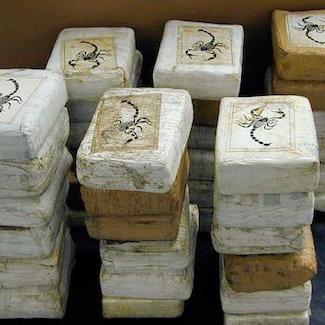
Antoine Kassis, a cousin of Bashar al-Assad, was convicted in a U.S. court for conspiracy to commit narco-terrorism and support the ELN, following a two-year DEA sting operation that exposed a $14 million deal to trade 500 kilos of cocaine for Iranian and Russian weapons.
The trial revealed a four-continent scheme involving Iranian allies, cartels, and rebel groups, with weapons sourced from Iran and Russia via routes established by Lebanese Hezbollah. This illicit empire, largely controlled by the Islamic Revolutionary Guard Corps (IRGC), enables Iran to circumvent international sanctions and fund proxy militias, a strategy expected to intensify as Iran navigates regional conflicts.
Hezbollah has historically used illicit financial activities in South America, including smuggling and money laundering, to fund its operations and maintain resilience against economic pressure. Kassis utilized a Lebanon-based money-laundering network, moving $82.5 million in cryptocurrencies over 18 months.
He leveraged his Assad family connections, claiming the Syrian government charged $10,000 per kilo for cocaine imported through Latakia, and also trafficked cocaine for Hezbollah and operated a meth lab in Papua New Guinea. Matthew Levitt of the Washington Institute states Iran will "double and triple down" on illicit revenue opportunities, while Mohsen Sazegara, a co-founder of the Revolutionary Guard, notes the independence of proxy groups ensures their illicit operations will persist even with potential regime change in Iran.
The conviction represents a "major step towards justice and accountability" for the Syrian people, according to Mouaz Moustafa of the Syrian Emergency Task Force.