News
China · Energy Transition · Gulf States · Renewable Energy
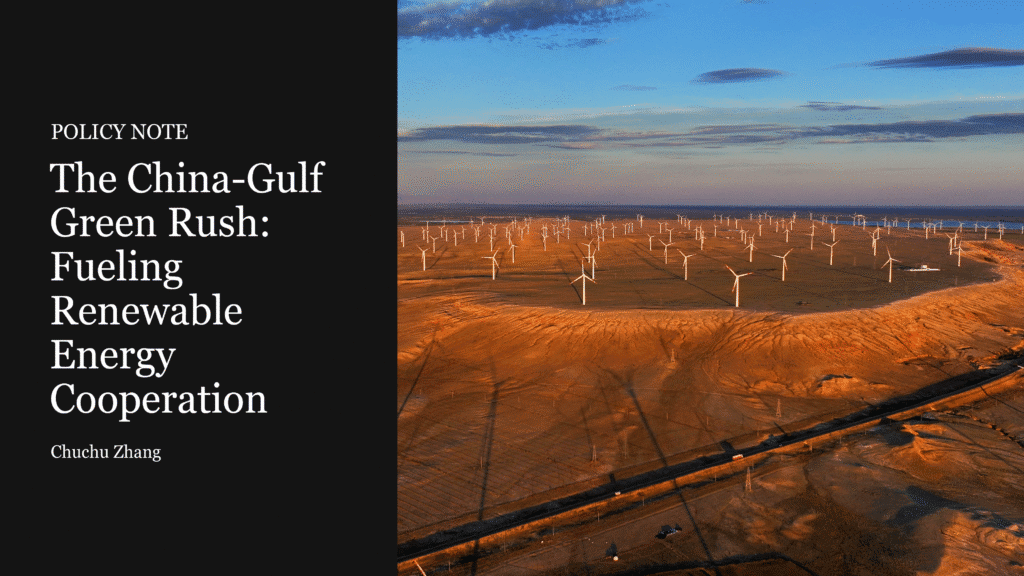
China and Gulf states are transforming their energy relationship from fossil fuel dependency to complex interdependence, strategically deepening cooperation in renewable energy systems, with China investing approximately $9.5 billion in Middle East clean energy projects between 2018 and 2023, and Gulf states committing up to $50 billion by 2030 in China's clean power assets.
This profound paradigm shift is driven by China's pursuit of energy security, rigorous climate objectives (peaking carbon emissions by 2030 and achieving carbon neutrality by 2060), and an economic reconfiguration towards high-value, innovative industries like electric vehicles, lithium-ion batteries, and solar photovoltaic modules. Gulf states, facing eroding fossil fuel dominance, persistently low oil prices, and domestic pressures from rapid population growth and surging energy consumption, are channeling growing investments into renewables as a cornerstone of their diversification agendas, such as Saudi Arabia’s Vision 2030.
The partnership leverages the Gulf's unparalleled solar, wind, and hydrogen potential with China's advanced energy storage ecosystem and manufacturing prowess. Notable collaborations include the Silk Road Fund's 2019 acquisition of a 49% stake in Saudi Arabia’s ACWA Power Renewable Energy Holding, and Abu Dhabi’s CYVN Holdings investing $738.5 million in Chinese electric vehicle manufacturer NIO in 2023.
Future cooperation aims for integration across the value chain and systemic decarbonization, particularly in developing a comprehensive hydrogen energy industry in the Middle East.