Araverus
NewsMarketsResearch
News
HeadlinesThreadsAtlas
© 2026 Araverus
AboutContactPrivacyTerms

Araverus does not provide financial, investment, or trading advice. All content is for informational purposes only. Full disclaimer

  1. News
  2. /
  3. Economy
  4. /
  5. Trade
Top Headline

US-China Trade War Escalates, Recession Risk Rises

Araverus Team|Friday, March 27, 2026 at 5:00 PM

US-China Trade War Escalates, Recession Risk Rises

Araverus Team

Mar 27, 2026 · 5:00 PM

Global Trade · Recession Risk · Tariffs · US-China Trade War

Global TradeRecession RiskTariffsUS-China Trade War

Key Takeaway

The escalating US-China trade war means significant market volatility and heightened recession risk for investors. This means increased inflation and unemployment for the US economy, a weaker dollar for currency markets, and potential capital flight impacting Treasury yields and the S&P 500. For global businesses, it means a necessary re-evaluation of supply chains and trade policies, with China potentially seeking new alliances.

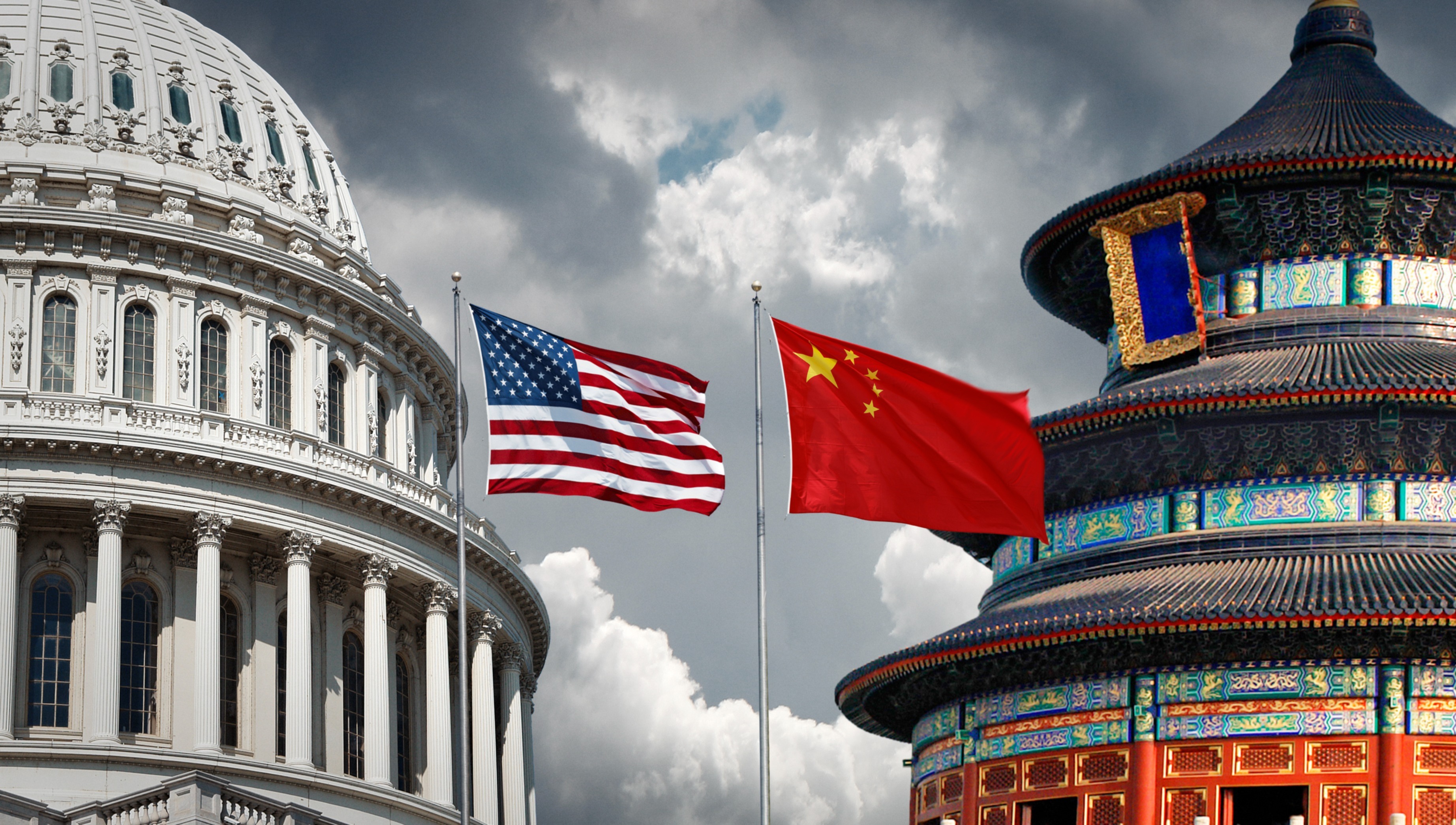
The US-China trade war has intensified dramatically, with both nations imposing additional reciprocal tariffs of 125% on imports, leading to a significant increase in global recession risk and a sharp decline in US financial markets.

President Donald Trump views tariffs as a means to finance tax cuts, reduce the US trade deficit, and attract manufacturing, aligning with his strategy to break off trade relations with surplus economies like China. The article states that a collapse in imports due to tariffs will lead to dramatic price increases for manufactured goods and disrupt supply chains in key sectors such as automotive, chemicals, and electronics.

Inflation is projected to reach 4% by year-end, and unemployment will climb to 5-6%, pushing the US economy into recession. A more severe scenario involves a loss of confidence in US governance, triggering capital flight and a balance of payments crisis.

Since April 2, the US dollar has fallen from 0.93 to 0.88 against the euro, Treasury yields jumped 50 basis points, and the S&P 500 lost 7.6% of its value since the beginning of the year, indicating capital outflow. China plans to partially offset the tariff shock with domestic stimulus measures, as domestic sales account for 81% of industrial companies' turnover, with direct exports to the US representing only 2.7%.

The Chinese government will increase subsidies for affected SMEs. Globally, business partners must review trade strategies, potentially aligning with US policy or strengthening ties with multilateralist economies like Japan, Southeast Asia, and Europe.

China will impose export quotas or minimum prices to address dumping concerns. Marcos Carias and Junyu Tan are the economists who authored this analysis.

Thread Timeline: Trump Trade Probes Raise Asian Concerns

Mar 12, 2026U.S. Trade Deficit Narrows Sharply to $54.5 Billion
Mar 13, 2026Trump Administration Initiates New Asia Trade Probes
Mar 14, 2026Trump Tariffs Spark Global Retaliation, Market Turmoil
Mar 27, 2026

US-China Trade War Escalates, Recession Risk Rises(current)

Read More On

About a year into the full-blown trade war between the U.S. and China, trade between the world’s two largest economies has plunged to levels not seen in decadeswsj.comThe dire ripple effect from a US-China trade war: A drop in foreign investment worldwide - CNBCcnbc.comFour years into the trade war, are the US and China decoupling? - Peterson Institute for International Economicspiie.comWhy is the US Trade Deficit Growing? The US-China Trade War 2.0 - gfsis.orggfsis.orgTrade war leaves both US and China worse off - UN Trade and Development (UNCTAD)unctad.org

Related Articles

World★★★Similarity: 69% · 5d ago

Fast Chips, Big Money, 3:30 a.m. Calls: Taiwan’s Urgent Quest to Win Over Trump

The stakes couldn’t get any higher for Taipei as America’s leader takes a softer tack on China.

Economy★★★Similarity: 68% · 1d ago

China Initiates Probes Into U.S. Trade Practices

China’s commerce ministry alleged that U.S. trade practices have disrupted global supply chains and trading in renewable-energy products.

Economy★★★Similarity: 68% · 1d ago

World governments were buried in public debt of more than $100 trillion when the Iran war began—and it’s limiting their ability to cushion the effects of energy-price shocks

World governments had more than $100 trillion in public debt when the Iran war began—limiting their ability to cushion the effects of energy-price shocks.

Economy★★Similarity: 67% · 3d ago

Asian Economies Walking Tight Rope Between Solid Momentum, Emerging Risk

Growth in the Asia-Pacific region is expected to hold up, supported by tech-oriented economies and sectors, despite the energy shock unleashed by the Mideast war, S&P Global Ratings said.